Published
The New “Pact for the Mediterranean” – Prioritising Areas of High Potential and Urgent Need
By: Jan A. Micallef
Research Areas: Africa EU Single Market, Institutions, and Governance Trade, Globalisation and Security
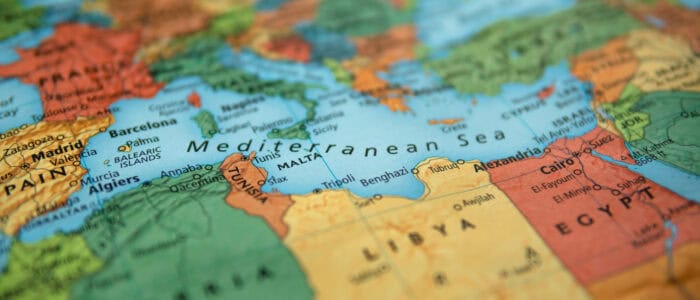
Over the years numerous ambitious initiatives sought to strengthen ties in the Mediterranean region. These range from the Barcelona Process to the Union for the Mediterranean and more. However, the extent of their success remains open to debate. Whilst these initiatives produced tangible benefits for the region, the delivery of their broader ambitions ultimately fell short. This was not necessarily due to flaws in the initiatives, but rather to the region’s inherent complexities which make lofty goals difficult to achieve.
The new “Pact for the Mediterranean” shares much with these predecessors: it is framed in optimistic language, presents very similar proposals and adopts a tone of “fresh starts” and “new beginnings” to reset relations and put them on the right track for the long term future. Reading the Pact at times feels like watching a film you have already watched before.
However, whilst the Pact is similar to its predecessors in substance and tone, there is a difference in the international economic and political context, which is now far more challenging. The Trump administration has upended decades of stability and predictability in global alliances and economic order, leaving Europe exposed. Meanwhile, a revisionist Russia continues its war in Ukraine and undermining Europe with every possible means. China, much like the United States, is leveraging its economic strength to make other countries dependent on it and coerce others to come into line with its interests and agenda. At the same time, middle powers such as Turkey and the UAE have become increasingly assertive across the region.
Compounding these challenges is the EU’s own internal weakness. With its competitiveness, economy and military credibility going through an existential crisis, the EU has become a geopolitical lightweight. At the same time Europe’s reputation in many Arab countries has also deteriorated, partly due to its perceived silence in the face of the heavy civilian toll in Gaza.
This raises a difficult question: can the EU realistically pull through and deliver on the ambitions of this new Pact? It is likely that several of its proposed initiatives will fail to take off as ambition clashes with the complexities of the region.
In a way there has never been a worse time to present such a Pact. Yet in a twist of irony and surrealism, there might also not have been a better time to do so. The Pact touches upon challenges that are a priority for all of the countries in the region and where remedies are possible if the various parts of the region work together. The key is to focus resources and political capital on these areas, while placing the rest in a slower lane.
For the economic pillar, the Pact’s most promising prospects lie in two interconnected areas:
- Energy and natural resources, and
- Industrial development in sectors where the EU depends excessively on China but cannot reshore production to Europe
By working on these two areas, the EU and Southern Neighbourhood Countries (SNCs) can see to have strong supply chains and more labour and economic growth, all supposedly accompanied by clean energy at competitive prices.
Energy and Natural Resources
The Mediterranean region holds significant potential in energy and natural resources, whether these are in the form of oil, gas, hydrogen and renewable energy production or raw materials important for industry. In a way, the EU has the demand and some technology and expertise to harness these resources, whilst the SNCs hold the actual resources themselves.
The lack of clean and affordable energy has become a serious issue for the EU. Cheap energy from Russia is now history. Producing clean energy within the EU at the levels and prices the EU aspires to is currently difficult.
Therefore, the EU should explore ways to improve access to Southern Mediterranean energy reserves. Energy can be accessed in two forms: (i) by accessing energy resources such as oil and gas or producing hydrogen and physically transporting these to the EU by maritime transport or pipelines; and (ii) by accessing energy flows that are produced in SNCs and transmitting the energy via mediums such as cables.
Starting with the first type of energy access, one action point under the Pact should be that the EU should review which countries have which resources, whilst also identifying the various arrangements and contracts that exist already between EU governments and the private sector in this area. This should lead to an evaluation on whether there can be any improvements in these existing arrangements and contracts, and whether the EU can approach SNCs for new contracts on a public and private sector level. The EU should be prepared to act wherever there is potential.
On the second type of energy access, the idea would be to produce enough clean energy on the ground in SNCs, to have that energy distributed to serve local needs and to export it to the EU. SNCs have strong potential in solar energy, for example. As an action point under this Pact, the EU and the relevant SNCs would need to see how economically feasible it is to gather this energy and transmit it accordingly at competitive prices. Needless to say, this type of energy access would require big infrastructure investments. So pursuing this deliverable would be much more complex than pursuing the first type of energy access. However the rewards in the form of clean affordable energy would be considerable, both for the SNCs hosting the projects, as well as for those importing the energy.
The Pact already already acknowledges the region’s strong potential in renewable energy. In this respect, it mentions the creation of the Trans-Mediterranean Renewable Energy and Clean Tech Initiatives (T-MED) and also foresees the use of the Global Gateway for energy-related projects. These ideas in the Pact should be worked upon accordingly.
Beyond energy, the EU should also look into accessing rare earths and critical minerals in SNCs. As an action point under this pact the EU should conduct a comprehensive review to identify which of these materials exist in SNCs and how they can be accessed. Here the idea should not only be to access the materials themselves, but also to invest and build refining and processing capacity in the countries in which they are sourced. The EU should also see how its Critical Raw Materials Act (2023) and forthcoming Rare Earths Strategy apply in the Mediterranean context.
Industrial Development
SNCs have the potential to become Europe’s preferred alternatives to China for selected industries that cannot be realistically reshored to Europe. This would constitute a model for “friendshoring.”
The potential here lies in the comparative advantages that SNCs may have to take up this role. As part of the action under this Pact the EU should audit what these advantages could be for each SNC. Do they offer competitive labour costs, affordable energy, reliable transport links to Europe, reasonable political stability and maybe access to strategic resources for the industry in question? Once this information is determined, the EU, on a governmental and private sector level, should see which SNCs are good candidates to host which industries. Learning from industries already operating successfully in the region, such as the automotive industry in Morocco, could offer valuable insights for this and also best practices.
Industries where the EU remains dangerously dependent on China, but which cannot realistically be brought back to Europe, should especially be focused upon. Examples include the manufacturing of solar panels, chemicals which require intensive energy use, as well as less complex electronics and battery technology components.
Industrial cooperation should also align closely with energy policy and transportation policy. Having access to competitive and clean energy is key for these industries to flourish. Efficient transportation must complement these efforts. Establishing industries in SNCs is futile if the resulting goods cannot moved efficiently or cost-effectively. Transportation can be improved by investing in infrastructure. However, simpler solutions, such as increasing the frequency, capacity and reliability of shipping connections between the respective SNCs and Europe using existing ports and infrastructure, can go very far. In this regard it is positive that the Pact has sustainable transport and increased connectivity as one of its aims for deliverables.
In theory all these factors should complement each other and trigger a cycle of all round improvement. Cleaner and more affordable energy locally, accompanied by other pull factors, can enable industrial clusters to be built in the respective SNCs. This will result in a demand for better transportation which could be catered for through market forces.
Some Words of Caution
It is clear that these initiatives must benefit all sides involved. Otherwise they could easily be classified as a new form of colonialism, whereby the EU seeks to extract from and rip off other countries, exploit low standards and engage in a race to the bottom for the sake of profit. Source countries must get their fair share from extracted resources. Energy projects must also benefit the host country. The industry clusters built in these countries must bring local benefits in the form of more and better labour opportunities and, where applicable, also skills training and technology transfer in order for clusters to develop local roots and enable the country in question to climb up the value chain.
Equally, these initiatives should not amount to simply replacing one dependency (on China or Russia) with another (on SNCs). Instead, they should foster genuine partnership — harnessing the region’s potential for mutual benefit. The EU would gain more resilient supply chains and cleaner affordable energy, whilst SNCs would benefit from industrial development, enhanced labour opportunities and cleaner energy.
Despite the difficulties being faced at the moment, the presentation of this Pact is a positive step as it can bring a lot of benefits if there is a focus on some of the most pressing issues as underlined above. These have to be considered for the Action Plan for this Pact foreseen for 2026. In the meantime as a first step there should be strongest political endorsement possible of the Pact by the EU and SNCs in November 2025.